
10 Reasons to Start Learning Hebrew Today
I'll be honest with you: three years ago, I thought learning Hebrew was something only religious scholars or people planning to move to Israel would do. Boy, was I wrong.
General Hebrew learning
Use the parts that match your current goal
What started as mild curiosity turned into one of the best decisions I've made. Hebrew isn't just another language to add to your resume—it's a gateway to a culture that somehow manages to be both ancient and cutting-edge. Think about it: where else can you read 3,000-year-old texts in the morning and discuss the latest tech startup in the same language by afternoon?
So here are 10 reasons why you should start learning Hebrew today. Not next Monday. Not after New Year's. Today. And trust me, I'll include the exact 30-minute plan that got me hooked.
TL;DR – Start with lesson 1 and easy trainer. 30 minutes — and you're already reading your first words. No, seriously.
1) Hebrew Opens Doors to Israel (And I Mean Real Doors)

Let me tell you about my friend Sarah. She landed in Tel Aviv with her family, armed with nothing but English and a lot of enthusiasm. The first month was... let's call it "character-building." Every pharmacy visit turned into charades, every phone call with the utility company became an anxiety episode.
Here's the thing about Israel:
-
Aliyah and relocation. Yes, the Aliyah program is incredibly generous—citizenship, financial support, free ulpan courses, health insurance. But here's what the brochures don't tell you: if you arrive already speaking some Hebrew, you skip the "lost puppy" phase entirely. You integrate faster, stress less, and actually enjoy those first months instead of just surviving them.
-
Work. Israel's tech scene is legendary. But even with stellar programming skills or medical credentials, Hebrew knowledge multiplies your opportunities. I've watched job offers increase by 30-40% for candidates who could conduct interviews in Hebrew. It's not just about the language—it's about showing you're serious about building a life here.
"I studied Hebrew for 6 months on HebrewGlot before moving. When I arrived, I could handle store transactions and actually understood the bus driver's announcements. That might sound small, but it removed SO much stress." — Alexander, programmer who made aliyah in 2024
My advice: Start with the basic course today. In 3-6 months, you could be doing job interviews in Hebrew. Practice daily in the trainer. Your future self will thank you.
2) It's Like Learning a Language That Came Back from the Dead (Literally)
Here's something that still blows my mind: Hebrew is the ONLY "dead" language that was successfully revived for everyday use. Let that sink in for a moment.
- Antiquity: This language has been around for 3,000 years. When the pyramids were already ancient history, people were writing in Hebrew.
- Revival: One incredibly stubborn man, Eliezer Ben-Yehuda, decided in the early 20th century that Hebrew should be spoken again. People thought he was crazy. He literally raised his son speaking only Hebrew when nobody else in the world was doing that.
- Modernity: Fast forward to 1948, and Hebrew is the official language of a high-tech nation. People argue about politics, code software, and order coffee in the same language used to write the Torah.
I remember the first time I read a Psalm in Hebrew and then switched to checking Israeli Twitter. Same alphabet, same grammar, centuries apart. It's like having a time machine in your pocket. And honestly? Reading Amos Oz or Etgar Keret in the original is worth the learning effort alone—translations are good, but they miss the wordplay, the rhythm, the soul of it.
Want to understand the grammar foundation? Start with binyanim—it's the verb system that makes everything click.
3) Career Boost — Even If You Never Set Foot in Israel
Let me share a secret from the professional world: niche skills are golden. And Hebrew? It's beautifully niche.
-
Translation and teaching. There's growing demand for Hebrew teachers and translators worldwide. I know a translator in Berlin who added Hebrew to her English-German repertoire—her rates went up 40%, and suddenly she had clients lining up for contracts with Israeli companies.
-
International projects. Israel punches way above its weight in tech innovation, cybersecurity, and medical devices. If you work in any of these fields, Hebrew isn't just useful—it's a career accelerator. I've seen businesspeople stumble through English presentations in Tel Aviv, missing half the networking magic happening in Hebrew during coffee breaks.
One of my colleagues added "Professional Hebrew" to his LinkedIn. Within two weeks, he had three recruiters reaching out for roles he would never have been considered for otherwise. Your resume stops being just another piece of paper in the pile—it becomes interesting.
4) Your Brain Will Actually Thank You
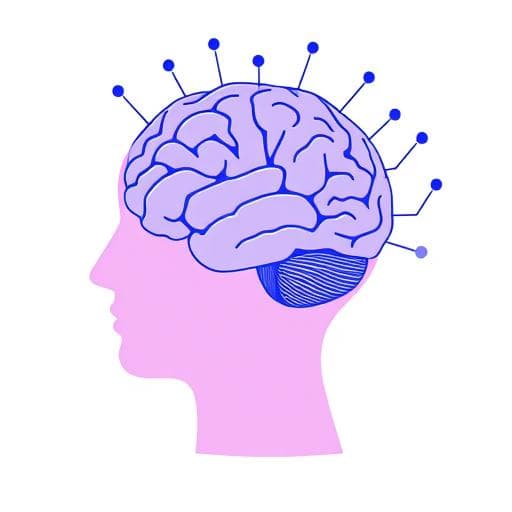
Okay, this is where it gets nerdy (in the best way). Learning Hebrew is like CrossFit for your brain.
First, there's the alphabet. Twenty-two completely new shapes you've never seen before. Then—plot twist—you read right to left. The first time I tried it, my brain literally hurt. But in a good way, like after a solid workout.
Here's what happens:
- Your memory gets a massive upgrade because you're constantly recalling new letter shapes and word patterns
- Your concentration sharpens—try reading right-to-left while your brain screams "WRONG DIRECTION!"
- Your logic skills improve because Hebrew verbs work like mathematical formulas (the binyan system is basically linguistic algebra)
- Your creativity blooms because you're making new neural pathways
I'm not making this up—there's actual research on how learning new writing systems improves cognitive function. But honestly, you don't need a study to feel the difference. After three months of Hebrew, I noticed I was sharper in my regular work, better at problem-solving, more focused. Unexpected bonus!
5) Travel Like You Actually Live There

You know that moment when you're in a foreign country and someone assumes you're a tourist, and suddenly everything costs twice as much? Yeah, Hebrew erases that.
My first trip to Israel without Hebrew: I paid 80 shekels for a taxi ride from the airport. My friend, who spoke Hebrew, took the same ride the next day for 45 shekels. Same distance. The driver heard Hebrew, assumed she knew the local rates, charged fairly.
But it's not just about money (though saving 30% on everything is nice). It's about:
- Actually understanding the jokes vendors make at Mahane Yehuda market
- Reading those cryptic signs that lead to the best hummus place (hint: it's never where tourists go)
- Catching the subtle moment when Israelis switch from polite-to-tourists mode to real-person conversation
- Negotiating at the shuk without feeling like you're playing a game where you don't know the rules
Last time I was in Tel Aviv, I chatted with a cafe owner in Hebrew. She ended up showing me her favorite hidden beach, the one that's not in any guidebook. That doesn't happen when you're pointing at pictures on a menu.
Start here: Learn 50 words for tourists before your next trip. It's the minimum effective dose for unlocking the real Israel.
6) Israeli Culture Without the Translation Filter
Look, I love subtitles. But here's what they can't capture:
I was watching Shtisel with subtitles, and in one scene, the grandmother makes this absolutely devastating comment. The subtitle said "That's unfortunate." My Israeli friend, watching with me, was crying-laughing. The actual phrase? It was this perfectly timed, culturally loaded piece of Jewish grandmother wisdom that doesn't exist in English. The translator did their best, but "That's unfortunate" versus the actual Hebrew? Not even close.
What you're missing:
- Series: Shtisel, Fauda, Tehran — the rhythm of actual Israeli conversation, the pauses, the way people interrupt each other (constantly)
- Films: Footnote, Lebanon, Waltz with Bashir — wordplay that makes you go "ohhhhh THAT's what that title means"
- Music: Idan Raichel, Noa, Omer Adam — singing along instead of just vibing to sounds
- Literature: Amos Oz, David Grossman, Etgar Keret — these writers play with Hebrew like jazz musicians
Etgar Keret's stories in translation are good. In Hebrew? They're devastating in completely different ways because he uses the quirks of the language itself as part of the joke/tragedy.
Once you can watch Israeli comedy without subtitles, you'll get why Israelis think they're the funniest people on earth. (Spoiler: they might be right.)
7) Access to Religious Texts
Hebrew is the language of Torah, Psalms (Tehilim), Siddur, Mishnah, and Talmud. Knowledge of the language reveals nuances of meaning that translation doesn't convey. Master verb structure in the binyanim section.
8) It's Way Easier Than People Told You
Can we talk about how everyone loves to scare learners? "Oh, Hebrew is SO hard." "The alphabet is impossible." "You'll never get the pronunciation right."
Bull. Here's the truth:
Myth: "Hebrew is impossibly difficult."
Reality: The grammar is actually MORE logical than English. Once you learn the patterns, everything clicks.
Myth: "It takes years to speak."
Reality: I had basic conversations after 3 months. Were they sophisticated philosophical debates? No. Could I order food, give directions, and chat with cab drivers? Absolutely.
What makes Hebrew surprisingly learnable:
- 7 binyanim with crystal-clear rules—it's like learning verb formulas in math class
- 3-letter roots—once you know the root ק-ר-א (related to reading/calling), you can guess meanings of dozens of related words
- No grammatical cases—unlike Russian or German where the word changes based on its function in the sentence
The alphabet looks scary until you spend 6 hours with it and realize it's just 22 shapes. I learned it in a weekend. You can too.
Don't believe me? Try lesson 1 right now. It's 15 minutes. If you can't read a Hebrew word by the end, I'll be shocked.
9) You're Not Alone (Like, Millions of People Are Learning Too)
Here's something cool: you're joining millions of people worldwide who are learning Hebrew right now. And unlike learning, say, Sumerian (sorry, Sumerian learners), there's a massive, active, friendly community ready to help.
I remember my first week feeling completely lost. Then I found:
- Telegram: "Learning Hebrew Together" channel—someone's always awake somewhere in the world to answer your random 2 AM question about verb conjugation
- Facebook groups: Full of beginners asking the same "wait, is this letter ב or כ?" questions you're afraid to ask (spoiler: everyone asks this)
- Reddit r/hebrew: Where people share memes about the struggle and natives patiently explain why certain phrases don't mean what you think they mean
- #hebrewlearning on social media: Daily motivation, study buddies, corrections from kind strangers
The best part? Online clubs, Zoom conversation groups, movie watch parties. Last month I joined a virtual viewing of an Israeli comedy show with learners from Brazil, Russia, and Canada. We paused every two minutes to explain jokes to each other. It was chaotic and hilarious and actually helped my comprehension way more than solo studying.
Learning a language alone is hard. Learning with a global community cheering you on? That's a totally different experience.
10) Zero Excuses: Start for Literally Free, Right Now
Okay, this is my favorite part. You don't need money. You don't need special equipment. You don't need to enroll in a course or buy textbooks or wait until Monday.
You need:
- A phone or laptop (which you're using right now)
- 15-30 minutes
- The willingness to feel slightly stupid for about a week (after which you'll feel like a genius)
Start literally right now:
- HebrewGlot — you're here, start with the free lessons
- YouTube — thousands of free video lessons
- Duolingo — gamified practice while you're on the toilet (hey, multitasking)
- Tandem/HelloTalk — language exchange with actual Israelis who want to practice English
I started with zero budget. Just me, my phone, and stubborn determination. Six months later, I was reading Hebrew news articles.
Your first 15 minutes (seriously, do this NOW):
- Register on HebrewGlot — it's free
- Complete lesson 1 — you'll learn the first letters
- Open the easy trainer — practice what you just learned
That's it. You'll have started. The hardest part is always starting.
Quick Start: 30-Minute Plan (For the Overachievers)

00:00-02:00 — register on HebrewGlot.
02:00-17:00 — lesson 1: alphabet and first syllables.
17:00-27:00 — dictionary: 5-10 words.
27:00-30:00 — easy trainer.
Result: you read simple words and pronounce basic phrases.
Week → Month: How to Consolidate
First week (30 minutes daily):
- 15 min — lessons HebrewGlot
- 10 min — new words (dictionary)
- 5 min — review
By end of week:
- familiar with alphabet;
- reading simple words;
- active vocabulary 30-50 words.
First month (40-60 minutes daily):
- 20 min — lessons;
- 15 min — trainer;
- 10 min — new words;
- 15 min — review.
By end of month:
- understand binyan logic;
- conjugate verbs in present tense;
- 200-300 words active;
- basic dialogue without prompts.
Timeline and Benchmarks
- Basic communication: 2-4 months regular practice.
- Ulpan א (beginner): ~6 months intensive practice.
- Ulpan ב (intermediate): 12-18 months.
- Confident speech: 2-3 years with immersion.
The main thing is regularity.
Investment That Pays Off
| Skill | Time | Cost | What You Get |
|---|---|---|---|
| Hebrew (HebrewGlot) | 6 months | $40 | Career, aliyah, culture |
| English (courses) | 2 years | $1,300 | Career |
| Programming | 1 year | $650 | Career |
| Driver's license | 3 months | $520 | Mobility |
Hebrew is one of the most affordable investments in yourself.
Real People, Real Results (Not Made Up, I Promise)
Irina, 32, programmer: "I was skeptical. Forty minutes a day felt like a lot, but I stuck with it. Three months later, I landed in Israel and got a programming job within two weeks. My interviewers literally said Hebrew gave me an edge over other candidates."
Vladimir, 65, retired teacher: "Everyone told me I was too old. I wanted to read Torah in the original before I die. One year of online classes later, I'm reading weekly portions and catching meanings the English translation completely misses. Best retirement project ever."
Maxim, 28, freelancer: "Added 'Hebrew - Professional' to my resume along with English. My income grew by 35%, and suddenly I'm getting projects with Israeli startups. The work is more interesting, pays better, and I'm learning way more. No brainer."
Stop Reading. Start Learning.
Look, you made it this far. You're interested. You want this. So stop overthinking it.
Right now, do this:
- Open HebrewGlot in a new tab
- Register (takes 30 seconds, it's free)
- Start lesson 1
- Spend 10 minutes in the trainer
One month from now, you'll read a Hebrew word on a sign or in a movie, and you'll understand it. And you'll remember this moment—when you decided to stop thinking about it and actually start.
The best time to start was six months ago. The second best time is right now.
Real talk: HebrewGlot exists because we got tired of fluff-filled courses that waste your time. We built something different—short lessons, effective trainers, clear progress tracking. Try the free lessons. If you like our approach, stick around. If not, we've at least gotten you started, and that's what matters.
Frequently Asked Questions
Is learning Hebrew worth it?
For most people, yes. Hebrew opens up Israel's culture and tech scene, deepens connection to Jewish heritage and texts, makes travel richer, and is a genuinely rewarding mental challenge. The payoff scales with your personal reasons for learning.
Is Hebrew a useful language to learn?
Beyond Israel's ~9 million speakers, Hebrew is valuable in tech, academia, religious study and the global Jewish community. It's also a gateway to understanding the region and an asset for careers connected to Israel.
How hard is it to learn Hebrew?
It's rated moderately challenging for English speakers (right-to-left script, root-based verbs), but it has real advantages too: phonetic spelling, no cases, and only three tenses. Most learners find it more approachable than they feared.
How long until I can have a basic conversation?
With consistent daily practice, simple conversations are realistic within 2–3 months, and comfortable everyday exchanges within 6–12 months. Speaking out loud early speeds this up a lot.
What's the best way to start learning Hebrew?
Begin with the alphabet and common phrases together, build a short daily habit, and follow a structured path. Start free with the HebrewGlot lessons and the trainer.
Related lessons and trainers
Article updated: June 3, 2026 Written by someone who started from zero and actually made it*